Paris · Last updated 17 September 2026
The Techno Parade route and the Heritage Days programme are both published. Times can still change, so check the Journées du Patrimoine portal and the parade's Instagram before fixing your day. Written by the Tres Gatos team in Paris.
On the third weekend of September, the French state unlocks its palaces. The Élysée, the National Assembly, the Sénat, ministries and embassies, buildings that spend the other 363 days behind a gate, open their doors and let the public in for free.
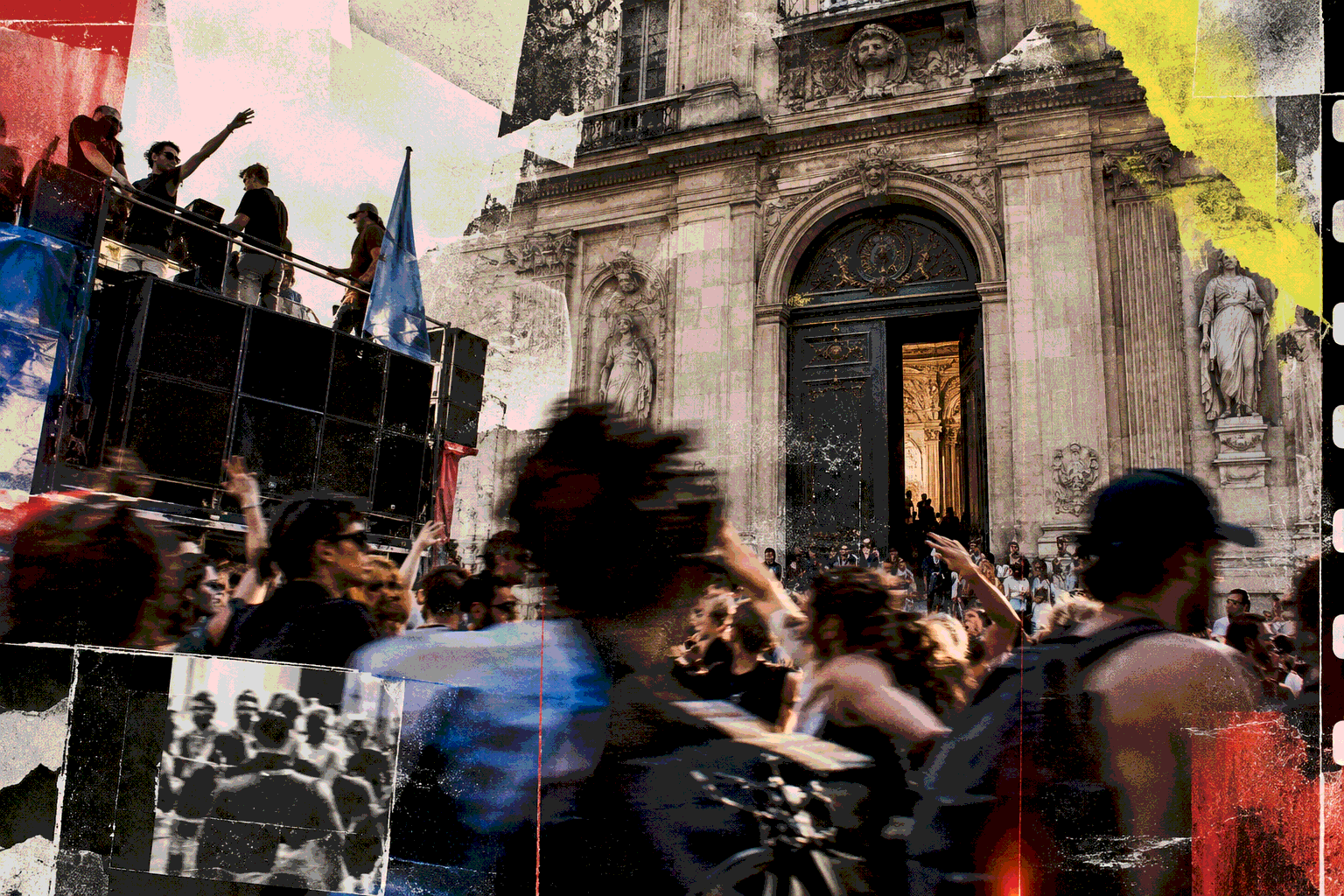
On the same Saturday in 2026, ten sound-system floats will move down Boulevard Voltaire with several hundred thousand people behind them.
Both are worth your day. They are a few kilometres apart, and this is the year they finally have something to do with each other.
What is happening in Paris on Saturday 19 September 2026?
Two large free events fall on the same day: the 43rd European Heritage Days, running Saturday 19 and Sunday 20 September, and the return of the Techno Parade after two years away, on Saturday 19 September. Neither needs a ticket. Together they will put a very large number of people onto the streets of central and eastern Paris at once.
They do not overlap geographically. Heritage Days concentrate in the 6th, 7th and 8th arrondissements: the Left Bank institutions and the ministries around the Faubourg Saint-Honoré. The parade runs east, from Bastille through République and along Voltaire to Nation. What they do share is the metro, which will be carrying both crowds all afternoon.
Sources: Journées européennes du patrimoine · Ministère de la Culture
When is the Techno Parade 2026, and is it free?
Saturday 19 September 2026, and yes, it is free: no ticket, no registration and no gate. You join the procession wherever you like along the route and leave when you have had enough. The Technopol association, which has organised it since 1998, confirmed the date in May 2026.
There is a neat symmetry to that date. The very first Techno Parade took place on 19 September 1998, created with the backing of the then culture minister Jack Lang and modelled on Berlin's Love Parade. More than 200,000 people turned out for it. The 2026 return lands on the same day of the same month, twenty-eight years later.
This is the first edition since 2023. The 2024 parade was cancelled because of the Olympic and Paralympic Games; the 2025 edition was called off for financial reasons, while Technopol reworked how the parade is funded. The 2023 parade, marking twenty-five years, drew several hundred thousand people, and across its first twenty-five editions the parade has brought millions onto the streets.
Sources: Techno Parade · @technoparade_paris
What is the Techno Parade route in 2026?
The route is out, and it follows the parade's classic line from Place de la Bastille to Place de la Nation. The floats set off from Bastille around midday and are expected at Nation at about 6 pm. Ten floats take part this year.
The route, in order:
- Place de la Bastille
- Boulevard Beaumarchais
- Boulevard des Filles du Calvaire
- Boulevard du Temple
- Place de la République
- Boulevard Voltaire
- Place de la Nation
Expect eastern Paris to be busy from late morning into the evening, and check the route before you commit to a restaurant on Voltaire. Some listings give the start as 12:30, so if you want to see the floats leave Bastille, be there by noon.
Sources: Radio FG · @technoparade_paris
Why does the Techno Parade matter more this year?
Because in December 2025, French electronic music was added to France's national inventory of intangible cultural heritage, and the bid was led by Technopol, the same association that runs the parade. The inscription is the first step toward a UNESCO candidacy. It was marked at a ceremony at the Ministry of Culture on 17 December, with the culture minister present.
Which produces the coincidence this article is really about. On 19 September the state opens its heritage to the public, and a street parade rolls through the same city celebrating its own new heritage status for the first time. Technopol's president, Tommy Vaudecrane, put it plainly to AFP: the first tears he shed for electronic music were under tear gas, back when it was treated as something to be stamped out.
Berlin's techno culture entered the German national inventory in 2024. Paris followed a year later. The parade on 19 September is the first time the French recognition gets celebrated in the street, which is where the argument was made in the first place.
Sources: Fiche d'inventaire, Ministère de la Culture · AFP via CNEWS
When are the Journées du Patrimoine 2026, and what are the themes?
Saturday 19 and Sunday 20 September 2026, the 43rd edition. Friday 18 September is a school day under the "Levez les yeux !" programme, so the public weekend is the 19th and 20th.
There are two themes this year. The first is the heritage of photography, marking the bicentenary of the invention of photography. The second, set at European level, is heritage in peril (sites threatened by time, conflict, disaster or climate), under the line raviver, résister, réimaginer.
The event has run since 1984, when the French Ministry of Culture invented it, and the rest of Europe copied it afterwards.
Source: Journées européennes du patrimoine, Ministère de la Culture
What can you actually get into in Paris?
The buildings people queue for are the ones normally closed to the public: the Élysée Palace, the National Assembly, the Sénat at the Palais du Luxembourg, ministries, embassies and private hôtels particuliers across the Marais and the 7th. Entry to nearly all Paris sites is free.
The distinction that matters is booking. Broadly:
- Booking required, and mostly gone by now: the Élysée is full, and the popular slots at the National Assembly, the ministries and the embassies went within hours of opening. It is still worth checking for returned places.
- No booking, just a queue: the Sénat at the Palais du Luxembourg has in past years announced waits of thirty minutes to an hour, which for the chamber and the library is a fair trade.
- Walk in: most museums, churches, courtyards, workshops and restoration sites, where mornings and the lunch hour are noticeably easier than mid-afternoon. The police station in Paris Centre opens to the public for the first time this year, with no booking needed.
One quirk worth knowing before you search the programme: institutions are often listed under their historic building names rather than their function. The Ministry of Justice appears as the Hôtel de Bourvalais. If you cannot find something, you are probably looking for the wrong name.
Source: Programme, Ville de Paris
When did booking open, and is anything left?
Most reservations opened in the first days of September on the Ministry of Culture's portal, and the famous addresses filled within hours. A few opened earlier, in late August.
The Élysée ran its own ticketing, which opened on Friday 4 September at 19:00, and it is now full. If you have a slot, the palace is open from 8:00 to 17:30 on both days, and the visit takes in the President's office, the Salle des Fêtes, the Cour d'honneur and the park. Bring photo ID; it is checked at the door.
If you missed it, the honest advice is to let it go and take the Sénat or one of the walk-in sites instead. Refreshing a sold-out page all morning costs you the day.
Source: Palais de l'Élysée
Which streets close, and how do you get around on 19 September?
Expect closures along the parade route, from Bastille to Nation, from late morning into the early evening, and heavy security around the institutional sites in the 7th and 8th all weekend. The police order for the day sets the exact closures along the route.
Practical shape of the day:
- The metro is the pinch point, not the streets. Lines 5 and 8 serve both Bastille and République, and lines 1 and 9 run to Nation, so they will carry the parade crowd. Stations on the route are sometimes closed at street level once the density builds.
- Cross the east of the city before midday if you have somewhere to be. Once the parade is moving, anything that has to pass through Bastille, République or Nation becomes slow.
- Walking beats everything in the 6th and 7th that weekend. The Heritage Days sites are close together and the queues, not the distances, are what cost you time.
- Taxis and VTC are the worst option on the parade side of town. Do not plan an airport run from eastern Paris on Saturday evening.
Source: RATP traffic information
Can you cycle in Paris that weekend?
Yes, and on the Saturday it is the most reliable way to move. Paris has more protected bike lanes than it did even three years ago, and the two crowds sit in different parts of the city, which is exactly the situation a bike handles better than a train.
The caveats are narrow. Do not try to cross the parade route while it is moving; go around, north by the Canal Saint-Martin or south by the river. Do not count on finding a free Vélib' dock near Bastille or Nation late in the day, because everyone else has the same idea. And the Left Bank around the Sénat and the Assemblée will have barriers and standing queues that spill into the road.
Mornings are clear almost everywhere, before the floats leave Bastille. A route set on the day, once the closures are actually up rather than as announced, is the difference between a good ride and forty minutes of pushing a bike through a crowd.
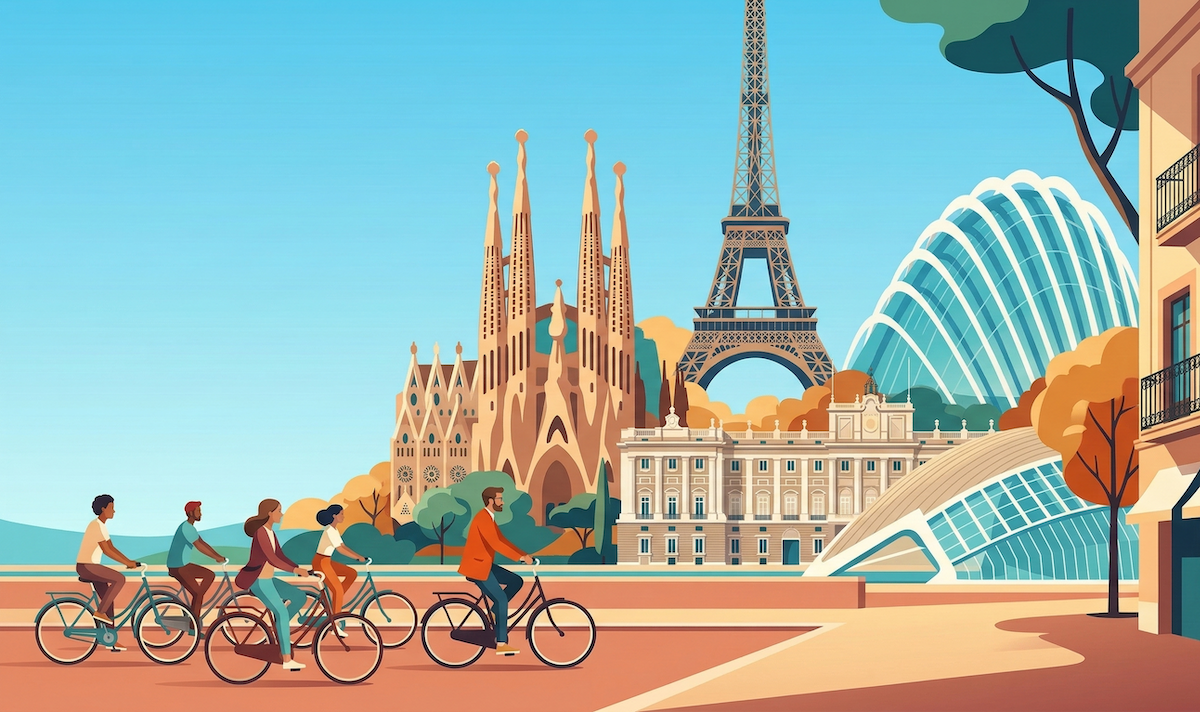
A morning ride is an easy way to see the city before either event gets going.
Can you do both in one day?
Yes, if you do the buildings in the morning and the parade in the afternoon. That is the order the day wants. It is not a compromise; it is how both events actually run.
Heritage sites open around ten and the queues are shortest before noon. The parade leaves Bastille around midday and reaches Nation at about six. Take the 6th and 7th in the morning on foot, eat somewhere near the river, then head east in the early afternoon and pick the parade up at République or along Voltaire. If you are booked into the Élysée for an afternoon slot, that is the day; the parade will still be going when you come out, but you will catch its last stretch towards Nation.
Sunday is the calmer of the two days for heritage. If your priority is the buildings rather than the noise, go Sunday and give Saturday to the parade.
What else is on in Paris in September 2026?
September is when Paris comes back to work, and the cultural year starts with it. The riverbanks stay car-free into the middle of the month under the Paris Plages programme. Jazz à la Villette runs from late August into the first week of September. The Fête de l'Humanité, part music festival and part political gathering, falls on 11–13 September. Festival d'Automne opens and runs to December, and Fashion Week closes the month.
For most visitors the practical point is simpler: the weather is still good, the terraces are still outside, the queues are shorter than in August, and the city is full of people who actually live in it again. Our calendar of Paris festivals and events in 2026 has the dates for the rest of the year.
A short, practical summary
| The date | Saturday 19 September 2026 |
| Heritage Days | Sat 19 – Sun 20 September, 43rd edition, free |
| Heritage themes | Photography, and heritage in peril |
| Techno Parade | Sat 19 September, free, first edition since 2023, and 28 years to the day since the first parade in 1998 |
| Parade route | Bastille → Beaumarchais → République → Voltaire → Nation, from about midday to 6 pm |
| Booking | Heritage: opened early September; the Élysée and most institutional sites are full, many museums and churches are walk-in. Parade: none needed |
| Where it concentrates | Heritage: 6th, 7th, 8th. Parade: Bastille, République, Voltaire, Nation |
| Official sites | journeesdupatrimoine.culture.gouv.fr · technoparade.fr · @technoparade_paris |
Two things on one Saturday that look like opposites: the state opening its palaces, and a street party that spent twenty-five years being treated as a nuisance. As of last December they are both officially heritage. Paris has a sense of humour about these things, even when it does not mean to.
Come and ride it with us in the morning, before either of them starts.
FAQ: 19 September 2026 in Paris
When is the Techno Parade in Paris in 2026?
Saturday 19 September 2026, exactly twenty-eight years to the day since the first Techno Parade in 1998. It is the first edition since 2023, after cancellations in 2024 for the Olympic and Paralympic Games and in 2025 for financial reasons. It is free and needs no ticket.
What is the Techno Parade route for 2026?
The parade sets off from Place de la Bastille around midday and runs along Boulevard Beaumarchais, Boulevard des Filles du Calvaire and Boulevard du Temple to Place de la République, then down Boulevard Voltaire to Place de la Nation, where it is expected at about 6 pm. It is the same line as in 2023, with ten floats this year.
When are the Journées du Patrimoine 2026?
Saturday 19 and Sunday 20 September 2026, the 43rd edition. Friday 18 September is reserved for school groups. The two themes are the heritage of photography and heritage in peril.
Is the Élysée Palace open to the public during Heritage Days?
Yes, on 19 and 20 September, and free, but only with a reservation made through the Élysée's own website. Booking opened on 4 September and is now full. If you have a slot, bring photo ID.
Do I need to book for Heritage Days in Paris?
For the institutional sites, yes: the Élysée, the National Assembly, most ministries and embassies all require it, and the popular slots went within hours of opening. The Sénat has run without booking in past years, with a queue of thirty minutes to an hour. Most museums, churches and workshops are walk-in.
Is everything free during Heritage Days?
Nearly everything in Paris is free. A small number of special guided visits carry a charge, and it is stated on the individual listing.
Will the metro be affected on 19 September?
Expect crowding rather than closure. Lines 5 and 8 serve both Bastille and République, lines 1 and 9 run to Nation, and all four carry the parade crowd through the afternoon. Stations along the route are sometimes closed at street level when density builds. Cross the east of the city before midday if timing matters.
Can I cycle in Paris on the day of the Techno Parade?
Yes, and it is the most reliable way to move. Do not attempt to cross the route while the parade is moving; go around by the Canal Saint-Martin to the north or the river to the south. Expect Vélib' docks near Bastille and Nation to be full or empty at the wrong moments.
Can I do the Heritage Days and the Techno Parade on the same day?
Yes. Buildings in the morning, when queues are shortest, then head east in the early afternoon and join the parade at République or along Voltaire; it reaches Nation at about 6 pm. If you have an afternoon slot booked at the Élysée, you will catch the last stretch of the parade.
Is September a good time to visit Paris?
It is one of the better months. The weather holds, the terraces are still outside, the August queues have gone, and the city is full of residents rather than empty of them. The cultural season opens in September, so there is more on than in July or August.
Questions about a specific date, or whether a tour runs on the 19th? Write to us through the contact page, in whichever language you prefer, and we will reply in the same one.